
Webinar Recap:
This webinar explores where AI actually belongs in the revenue stack, why most AI tools fall short in finance, and what it looks like when AI operates directly inside the revenue subledger.
What This Session Covers:
In this conversation, RightRev founder and CEO Jagan Reddy joins Jenn Newcomb, a revenue accounting veteran, to walk through the operational reality facing finance teams today. Business models are evolving faster than the systems designed to support them. Subscriptions, usage-based pricing, hybrid bundles, and AI consumption models create downstream complexity that accounting teams absorb manually. The discussion centers on why that problem exists and what it takes to solve it with AI.
A central theme is architecture. Most AI tools in finance are layered on top of fragmented systems. They can summarize reports and surface insights, but they do not operate where financial logic is actually executed. The speakers explain why the revenue subledger is the only layer where AI can produce outcomes that are consistent, explainable, and traceable back to source data.
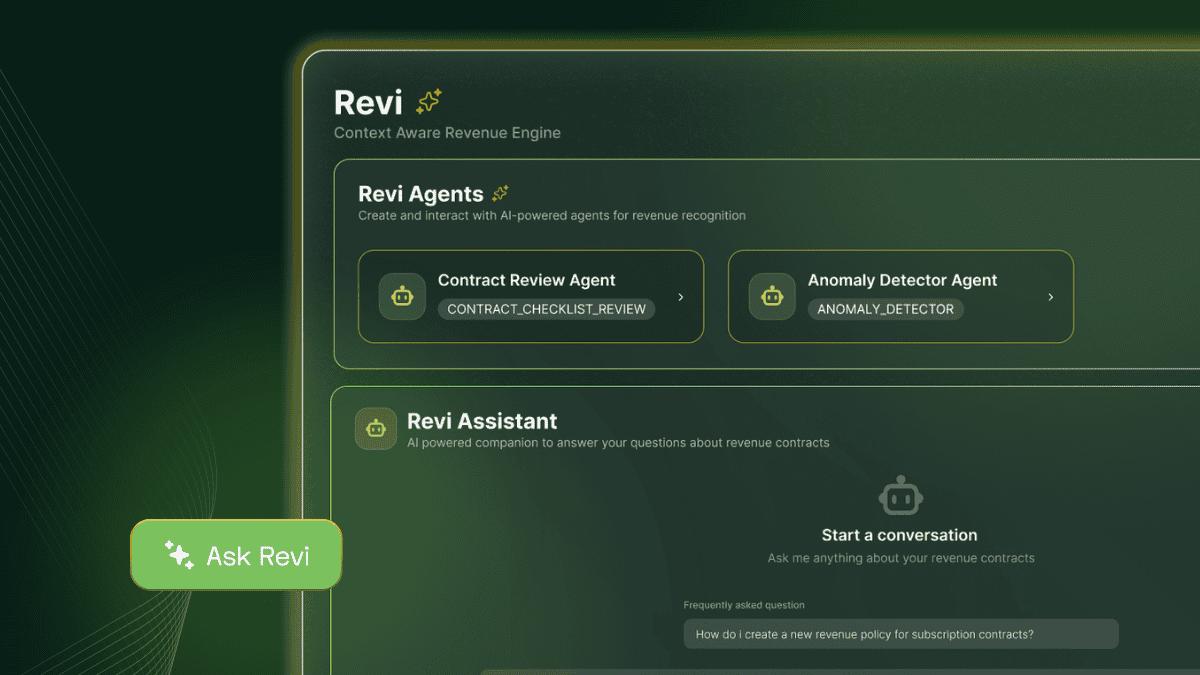
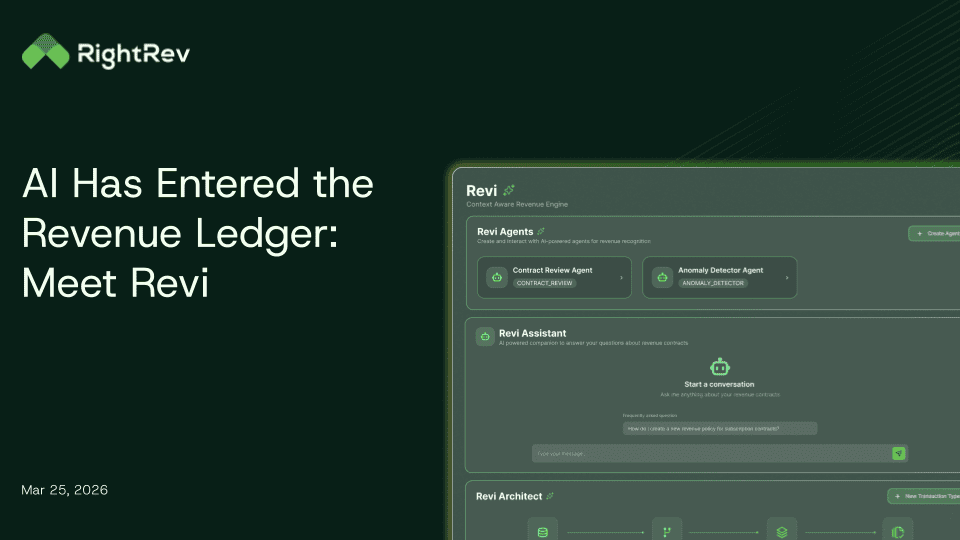
The session then moves into a live product demo. Jagan walks through four capabilities inside Revi, RightRev’s governed AI platform: the Contract Review Agent, which extracts key terms, maps performance obligations, and flags checklist failures automatically; the Anomaly Detector, which continuously scans revenue schedules and routes issues to a central inbox before they reach the P&L; Architect, which allows finance teams to define and simulate edge case revenue logic without writing code; and Revi Assistant, which gives teams conversational access to revenue intelligence directly from the subledger.
Human oversight is built into every workflow. The session addresses how approvals, audit logs, and escalation paths are structured so finance teams maintain control while automation handles the repetitive work.
Why This Topic Is Showing Up Now
Every software vendor is talking about AI. Most finance leaders are still asking the same question: where does it actually fit in revenue accounting, and can it be trusted?
The answer depends on where the AI lives. Tools built on top of disconnected systems produce insights that are hard to verify and outcomes that are difficult to defend in an audit. When AI operates inside the revenue subledger, with full context across contracts, pricing, billing, usage, and reporting, it can execute revenue workflows correctly and consistently, not just describe what happened after the fact.
This session explains that architectural distinction clearly and shows what it looks like in practice.
What Viewers Will Learn
- Why modern monetization models create manual bottlenecks for accounting teams
- How the revenue subledger provides the financial context AI needs to work reliably
- What deterministic, governed AI means in a finance context and why it matters for audit
- How to automate contract review, anomaly detection, and edge case revenue logic
- How Revi Assistant reduces report reconciliation and accelerates close preparation
Who Should Watch
This webinar is designed for CFOs, controllers, revenue accounting leaders, and finance operations teams at companies that:
- Manage subscriptions, usage-based pricing, or hybrid monetization models
- Spend significant time on manual contract review during close
- Want AI in their finance stack but need auditability and consistency before they can trust it
- Are evaluating how to reduce spreadsheet dependency without sacrificing control
- Need their revenue system to keep pace as pricing models continue to evolve
Watch the session to see how Revi automates revenue workflows inside the subledger and what that means for close speed, audit readiness, and operational scale.
Want to learn more? Read our blog about Revi
If you are ready to move beyond manual processes and bring governed AI into your revenue operations, request a demo to see how RightRev can help.