Revenue recognition is a cornerstone of accurate financial reporting, ensuring that businesses record revenue-generating transactions in line with established accounting standards and tax regulations. For any organization, especially those with multiple revenue streams, subscription services, or complex revenue scenarios, recognizing revenue correctly is essential for maintaining transparency, building stakeholder trust, and providing a true picture of the company’s financial health.
The process of revenue recognition involves more than simply recording a sale. Companies must carefully identify when and how to recognize revenue, taking into account customer contracts, performance obligations, transaction prices, and the timing of revenue-generating activities. This complexity is heightened by evolving accounting standards, such as ASC 606, introduced by the Financial Accounting Standards Board (FASB). These standards require a structured, five-step approach: identifying the contract, pinpointing performance obligations, determining the transaction price, allocating that price, and recognizing revenue as obligations are fulfilled.
For finance teams, managing these requirements manually can be daunting. Manual accounting processes are not only time-consuming but also prone to human errors, especially when dealing with high volumes of revenue transactions or intricate revenue models. Spreadsheets and manual reconciliations can lead to inconsistencies, delayed financial reporting, and increased risk of non-compliance.
This is where automated revenue recognition comes into play.
Revenue Recognition Automation
By leveraging revenue recognition software, companies can streamline revenue recognition processes, automate complex calculations, and ensure compliance with accounting standards. It may be hard to comprehend how automating revenue recognition is even possible. With its revenue policy intricacies and accounting technicalities, how can technology possibly automate the inputs from disparate sources and recognize revenue in compliance with ASC 606?
The revenue accounting process resembles a decision tree of possibilities, akin to navigating through a maze—a complex and bewildering network of passages. Commencing with the execution of a sales contract, the journey extends to posting revenue in the general ledger.
However, navigating this path from A to Z demands time, strategy, courage, snacks, adept Excel formulas, and swift keyboard shortcut skills!
This prompts the question: If each revenue team maintains its version of a cumulative spreadsheet, encompassing contract details, deliverable statuses, and discounts for allocations based on fair values, along with intricate formulas for merging and reconciling data files for month-end close reporting—how can revenue recognition be standardized and automated? ERP systems and other financial systems, while useful, often lack the flexibility and detail required for accurate revenue recognition, highlighting the need for specialized software solutions.
The solution lies in automating the decision tree of possibilities! The complexity of revenue recognition is further increased by complex business models and multiple revenue models, such as those found in software as a service and recurring revenue environments, which create complex revenue streams that require advanced automation systems.
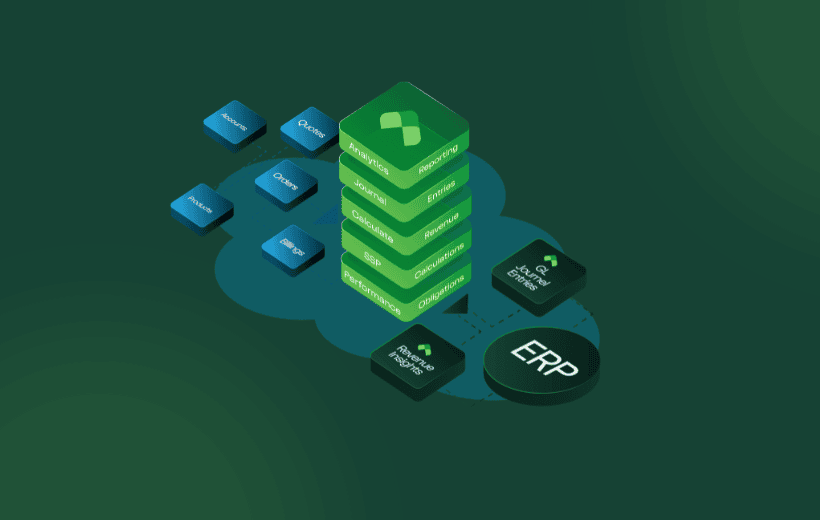
Revenue accounting automation is designed to pre-define rules based on policies and desired outcomes. These rules can be directly applied to data sourced from a sales contract and systems capturing orders, fulfillment, and billings. The result is a revenue contract with precise calculations and revenue forecast schedules over the contract term.
How does it work, you ask?
Just like a revenue analyst would review a contract for all of the critical components needed to define and account for revenue earned, rules can be configured with software to identify the same – (aka data mapping). Automation systems are specifically designed to handle complex revenue scenarios and automate revenue recognition for both simple and bundled contracts, ensuring compliance and efficiency.
For example Contract Number, Customer Name, Contract Term, Deliverables, SKUs, Quantity, Sell Price (discounts), Billing Terms, etc.
- An automated revenue sub-ledger, rather than a spreadsheet, takes on the role of incorporating formulas and rules to automatically aggregate data, calculate revenue, and recognize it at a point in time and over a term based on predefined rules.
- Building a map for revenue recognition is comparable to pre-configuring the rules for revenue automation.
- Revenue automation software documents and stores all possible outcomes for how and when to recognize revenue to manage the decision tree of possibilities and eliminate manual checkpoints.
- The software examines each product discount against pre-defined fair value amounts, determines if the sales discounts exceed the pre-defined range for each product, and, if so, performs revenue allocations across all eligible products, calculating the net revenue to be recognized.
- In another scenario, when Product D is sold over a 3-year term and billed annually at the start of each year, the revenue software rules calculate the monthly revenue amounts across all three years upon product activation, separating the revenue action from the billing action.
- RightRev exemplifies how it automates revenue rules by validating contract terms to recognize revenue. Mapping contract data from existing systems and pre-defining revenue rules results in a revenue contract with accurate calculations and journal entries posted to the General Ledger.
- Managing revenue accounting without standardized automation involves a reactive set of tasks after all systems have captured sales, booking, billing, and fulfillment data.
- Taking a proactive approach, automating the decision tree for revenue recognition creates seamless accounting paths from sales data to the general ledger, removing manual workarounds, and significantly reducing the risk of getting lost in the maze of possibilities.
Automation systems drive operational efficiencies and improved accuracy in revenue recognition.
Now that you understand how it works, read about the Top 3 Reasons to Automate Revenue Accounting.
Request a demo to see all of our revenue recognition capabilities.
Follow RightRev on LinkedIn to see more revenue insights.